The Driver of Productive RCM
by Paul Huelskamp, Alluvium Health CRO
Hospital Week is underway, and Alluvium Health proudly recognizes the extraordinary work U.S. hospitals deliver every day. Hospitals today are far more than acute care facilities - they are integrated health systems providing outpatient services, rehabilitation, specialty care, diagnostics, and a broad range of ancillary services across entire communities.
That scope of care is also a scope of complexity. Managing it requires significant operational discipline, particularly in Revenue Cycle Management (RCM). Traditionally, RCM focuses on optimizing what happens after a patient enters the system. But the larger opportunity exists upstream: ensuring the right patient reaches the right provider at the right time. In other words, solving the access-to-care challenge.
Consider a typical cardiac patient journey.
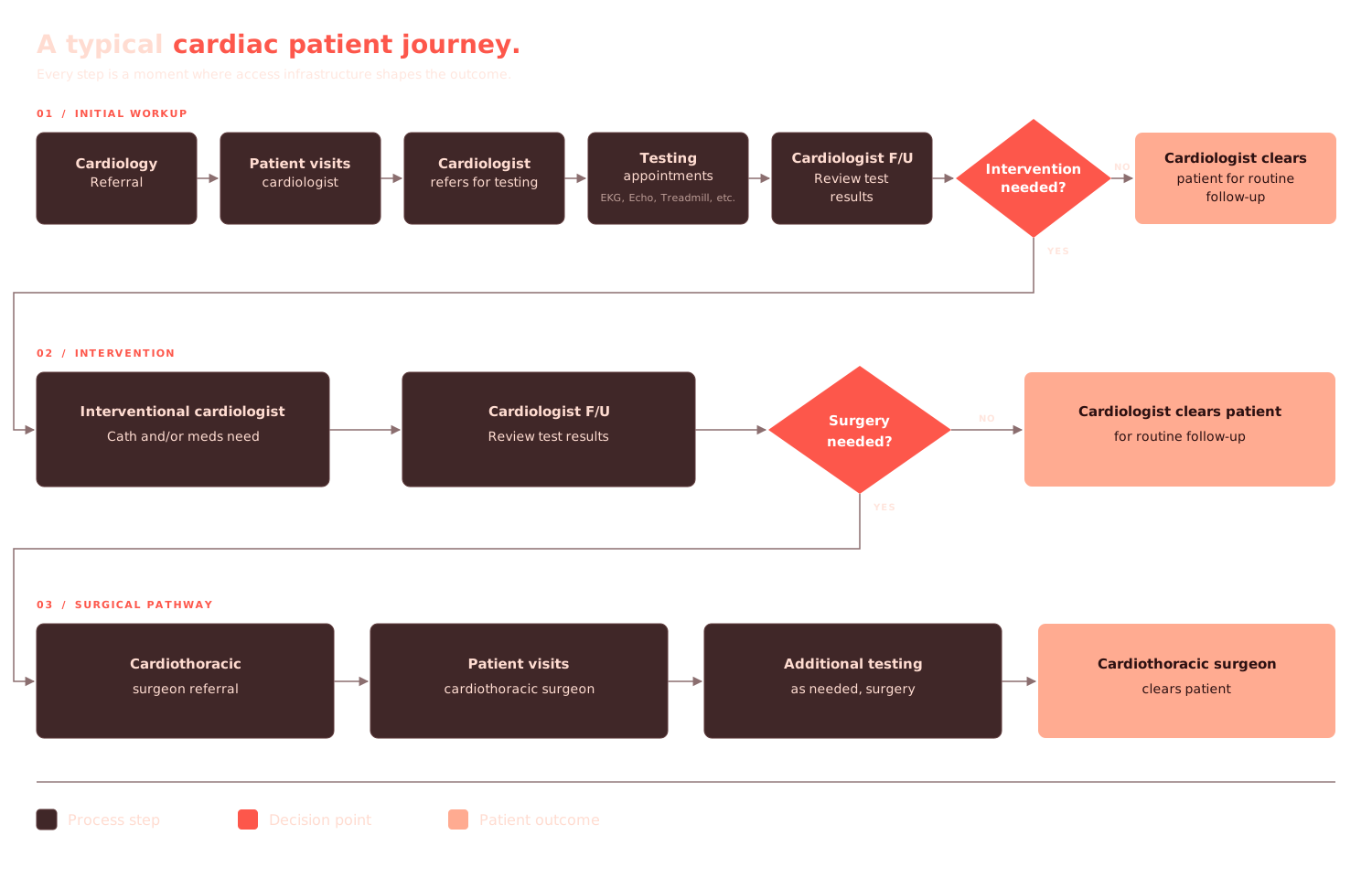
This simplified example - like many specialty care pathways - highlights the numerous moments where patients interact with a health system’s access infrastructure. Today’s patients are consumers shaped by experiences with Amazon, DoorDash, and OpenTable, where convenience, transparency, and speed are table stakes. Healthcare hasn't kept up.
According to Press Ganey’s Healthcare Consumer Experience 2025 report, nearly half of consumers now schedule appointments online, yet only 26% rate the experience as excellent, and more than one-third identify appointment scheduling as their single greatest frustration. Digital access remains healthcare’s “last mile” problem.
Overcoming the access-to-care challenge means connecting the right insights to the processes, people, and technology to deliver a modern consumer experience and stronger downstream RCM performance. Through your people, process and technology you action insight.
Insights
Large health systems sit on enormous amounts of access-related data that can be leveraged to better understand supply and demand patterns across their networks. Critical inputs include provider availability, scheduling rules, care locations, payer mix, new-patient capacity, referral trends, and patient scheduling preferences.
To operationalize these insights, leading organizations are adopting a “command center” approach — one that enables near real-time visibility and dynamic adjustments across communities, regions, or even multi-state networks. When access data becomes actionable, health systems can proactively align capacity with patient demand instead of reacting after bottlenecks occur. Modern platforms go further, enabling any operator to generate dashboards and views in plain language, forecast capacity constraints two to four weeks out, and model scenarios before committing resources. The shift is from reacting to bottlenecks to preventing them.
Process
Once health systems gain the visibility needed to optimize access, they must determine how care will be delivered and coordinated.
Will patients primarily engage through centralized call centers? Will self-service digital scheduling be available? Or will the organization deploy a hybrid approach that balances automation with human guidance?
Referral management presents an equally important question. When patients require specialty care, will they be left to navigate the process alone, or will the health system actively guide them through provider identification, qualification, and scheduling?
The answer directly impacts both patient experience and continuity of care. Many health systems have invested heavily in standardizing on a single Electronic Health Record (EHR) platform, and for good reason. But EHR standardization solves for clinical documentation and billing workflow. It was never designed to solve patient access. That gap is where the real opportunity lives.
People
Even the most sophisticated access strategy depends on people who deliver exceptional service. Staff interacting with patients must understand more than customer service; they need to grasp the operational and clinical value of keeping patients inside the network. One Alluvium Health client redesigned its referral workflow by implementing technology that schedules referred patients with specialists before they leave their originating appointment. Rather than handing patients a phone number and hoping for follow-through, staff present provider options in real time and secure appointments immediately. Behind that interaction, access leaders can co-edit the same live view, tag peers in, and resolve scheduling problems in context - not after the fact through email threads and exported spreadsheets.
The result: more than a 200% increase in accepted referrals, improved continuity of care, and stronger financial performance across the network.
Technology
Technology is what makes the other three work at scale. While EHRs handle basic scheduling and workflow functionality, they often struggle with interoperability, offer limited branding flexibility, and can be cost-prohibitive for affiliated specialty practices. Most importantly, traditional EHR platforms were not designed to orchestrate access management across an entire care ecosystem. The gap isn't just interoperability, it's intelligence. Health systems need platforms that don't just surface what happened but interpret the data and recommend where to focus and what to do next.
Health systems increasingly require platforms that bridge EHR gaps, unify scheduling intelligence, support system-wide branding, and deliver the seamless “last mile” digital experience consumers now expect.
The access-to-care challenge is real, and its impact extends far beyond patient satisfaction. It directly influences network retention, referral leakage, continuity of care, and ultimately, health system revenue.
But beyond the financial implications lies something even more important: delivering consumer-friendly access that adapts to every patient’s needs and demonstrates a health system’s commitment to guiding individuals through their entire care journey — from initial access to positive clinical outcomes.
That is the future of connected care.



Summer Access Demands Are Rising
by Paul Huelskamp, Alluvium Health CRO
Summer seasonal surges are colliding with physician, NP, and PA shortages. Health systems that treat workforce planning as capacity planning can protect access even when staffing is constrained.
Act with confidence.
Lead with intelligence.
Alluvium brings visibility, foresight, and coordination together—so healthcare leaders can deliver better care, faster.